
Choosing a fence is about more than just picking a style you like from a catalog. It is a decision that affects your home’s security, its curb appeal, and even your relationship with your neighbors. You might be looking for a way to keep a fast-growing puppy from escaping, or perhaps you want to create a private sanctuary where the outside world disappears. Whatever your motivation, the process involves balancing aesthetics with local regulations, maintenance requirements, and long-term costs.
This guide serves as a roadmap to help you make an informed choice. Deciding on the right materials and privacy fence design requires looking past the surface. You need to consider soil conditions, wind exposure, and how much time you actually want to spend scrubbing or staining your fence every few years. Monkey Fence has spent years installing diverse perimeter solutions, and that hands-on experience has shaped the practical advice found in these sections.
In the following guide, you will learn about:
- Defining your primary goals (privacy vs. security vs. aesthetics).
- Selecting the right materials based on climate and budget.
- Understanding property lines, permits, and legal obligations.
- Estimating costs and measuring for a professional installation.
- Maintaining your investment to ensure it lasts for decades.
By the time you finish reading, you will have the knowledge needed to select a fence that looks great on day one and remains functional and sturdy for twenty years or more.
Defining Your Purpose: Why Are You Building?
Before looking at wood grain or metal finishes, you must identify the primary job your fence installation needs to do. A fence that is perfect for containing a large dog might be completely wrong for an owner who wants to block out the noise of a busy street.
Privacy and Noise Reduction
If your goal is to turn your backyard into a secluded retreat, a solid-panel fence is usually the best option. These fences typically stand 6 to 8 feet tall and leave no gaps between the boards. A study from the Federal Highway Administration indicates that solid barriers can effectively reduce perceived noise levels if they are tall enough and have sufficient mass. For maximum privacy, owners often choose cedar or vinyl because these materials allow for tight construction.
Security and Safety
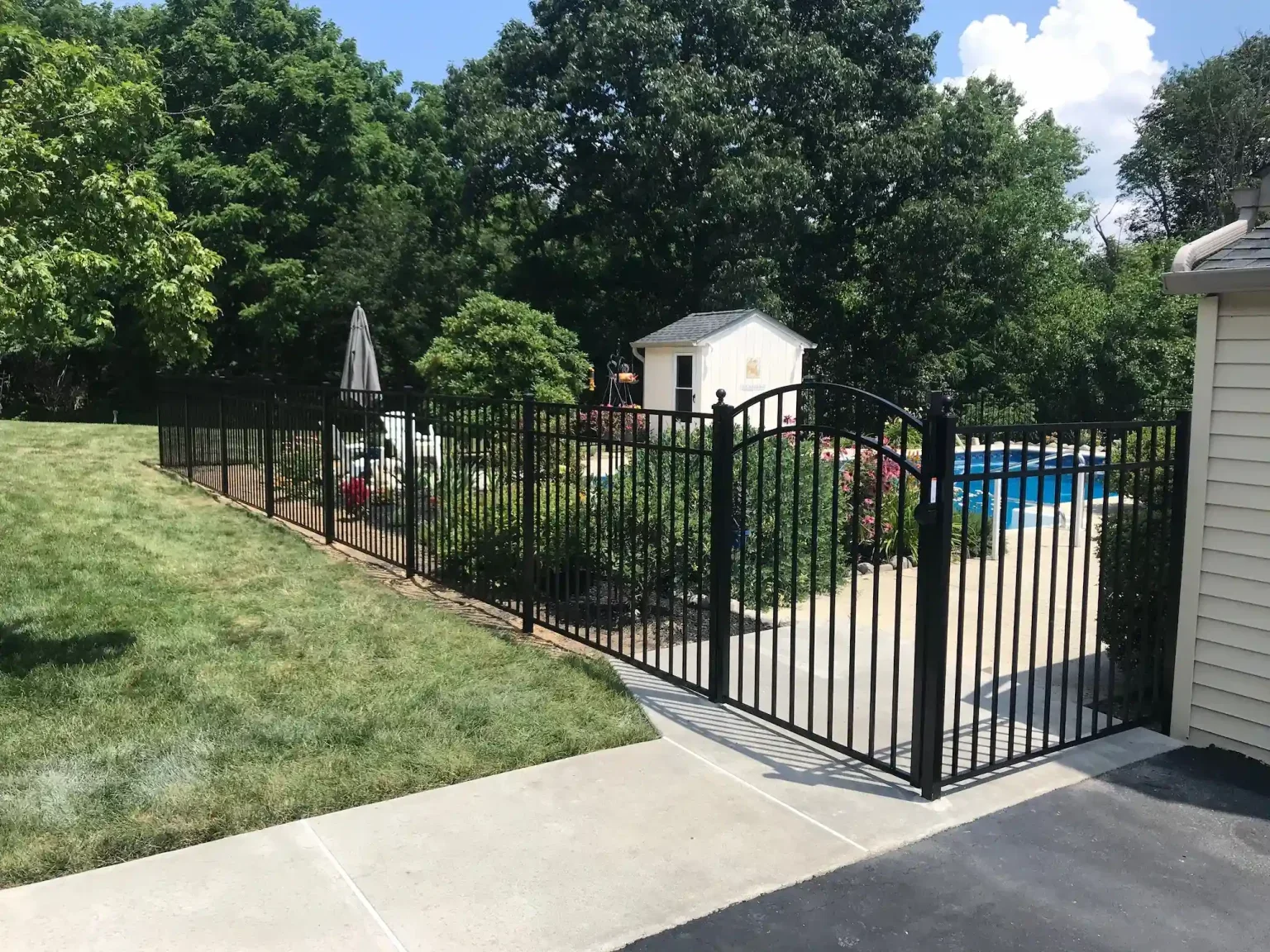
Security fences are designed to keep people out or keep children and pets in. For high-security needs, metal fences with pointed finials or tall, flat-topped aluminum panels are common. If you are fencing a pool area, safety is the law. According to guidelines from the U.S. Consumer Product Safety Commission, pool fences should be at least 48 inches tall with gaps no wider than 4 inches to prevent small children from squeezing through.
Decorative and Curb Appeal
Sometimes, a fence is simply a frame for your space. Low-profile picket fences or ornamental aluminum designs add character without blocking the view of your architecture or landscaping. These are often used in front yards where city ordinances might restrict the height of structures.
Key Takeaway: Start by ranking your priorities. A fence can serve multiple purposes, but focusing on the most important one (like pool safety or privacy) will narrow your material and design choices significantly.
Material Options: Comparing Pros and Cons
The material you choose is the biggest factor in determining the fence’s lifespan and the amount of work you will have to do to keep it looking new. Each climate presents different challenges for these materials.
Wood Fencing
Wood remains the most popular choice because of its natural look and versatility. Cedar is the gold standard for wood fences because it contains natural oils that resist rot and insects.
- Pros: Relatively affordable, highly customizable, and easy to repair.
- Cons: Requires regular staining or sealing; can warp or rot over time if not maintained.
Vinyl (PVC) Fencing
Vinyl has become a favorite for owners who want a “set it and forget it” solution. Modern vinyl is treated with UV inhibitors to prevent it from becoming brittle or yellowing in the sun.
- Pros: Virtually no maintenance beyond occasional washing; lasts for decades.
- Cons: Higher upfront cost than wood; can be prone to cracking under extreme impact in very cold weather.
Aluminum and Steel
Metal fencing provides a classic look often associated with wrought iron but without the constant rust issues. Aluminum is particularly popular because it does not rust, making it ideal for wet climates.
- Pros: Extremely durable, high visibility, and elegant appearance.
- Cons: Does not provide privacy; steel can rust if the coating is damaged.
Chain Link
While not always the most aesthetic choice, chain link is the most cost-effective way to secure a large area.
- Pros: Very affordable, durable, and provides security without blocking views.
- Cons: Minimal privacy (unless slats are added) and a more industrial appearance.
Material Comparison Table
| Feature | Wood (Cedar) | Vinyl (PVC) | Aluminum | Chain Link |
|---|---|---|---|---|
| Initial Cost | Moderate | High | High | Low |
| Maintenance | High (Staining) | Low (Washing) | Low | Very Low |
| Durability | 15-20 Years | 30+ Years | 50+ Years | 25+ Years |
| Privacy Level | High | High | Low | Low |
| Aesthetics | Natural/Warm | Clean/Modern | Elegant/Open | Industrial |
Legal Considerations and Property Rules
One of the most common mistakes property owners make is failing to check local regulations before digging. A fence that sits two inches over your neighbor’s property line can lead to expensive legal disputes or a forced tear-down.
Confirming Property Lines
Never assume you know where your property ends based on where the grass changes color or where an old fence once stood. The only way to be certain is to hire a professional surveyor. They will find the iron pins at the corners of your lot to establish your legal boundaries.
HOA and Municipal Codes
If you live in a community with a Homeowners Association (HOA), you likely have a strict set of “Covenants, Conditions, and Restrictions.” These might dictate the height, color, and even the specific material you are allowed to use. Similarly, city building departments often have height restrictions, especially for “sight triangles” near street corners to ensure drivers can see oncoming traffic.
The “Good Neighbor” Rule
In many areas, it is standard practice (and sometimes required by law) to put the “finished” or “pretty” side of the fence facing outward toward your neighbors or the street. This is not just a courtesy; it is often a code requirement.
Expert Tip: Always call 811 before you dig. This is a free service that coordinates with utility companies to mark underground gas, water, and power lines. Hitting a line is dangerous and can result in massive fines.
Design Styles and Trends
The style of your fence should complement your property’s architecture. A modern farmhouse looks great with a black split-rail or a white picket fence, while a contemporary home might benefit from horizontal wood slats.
Horizontal vs. Vertical Slats
Vertical slats are the traditional choice and are excellent for handling sloped terrain. Horizontal fences are trending in modern landscaping because they create a sense of width and a sleek, high-end feel. However, horizontal fences require high-quality wood or metal frames to prevent sagging over time.
Lattice and Toppers
To avoid making a tall privacy fence look like a fortress wall, many owners add a lattice topper. This allows light and air to pass through the top foot of the fence while maintaining privacy at eye level.
Color and Finish Trends
While natural wood remains a staple, there is a growing trend toward dark colors. Black and charcoal grey fences are becoming popular because they make green foliage “pop” and tend to recede into the background, making a yard feel larger.
Planning for Slope and Terrain
Not every backyard is a flat, perfect rectangle. Dealing with hills and slopes is where fence installation gets technical. There are two main ways to handle a slope:
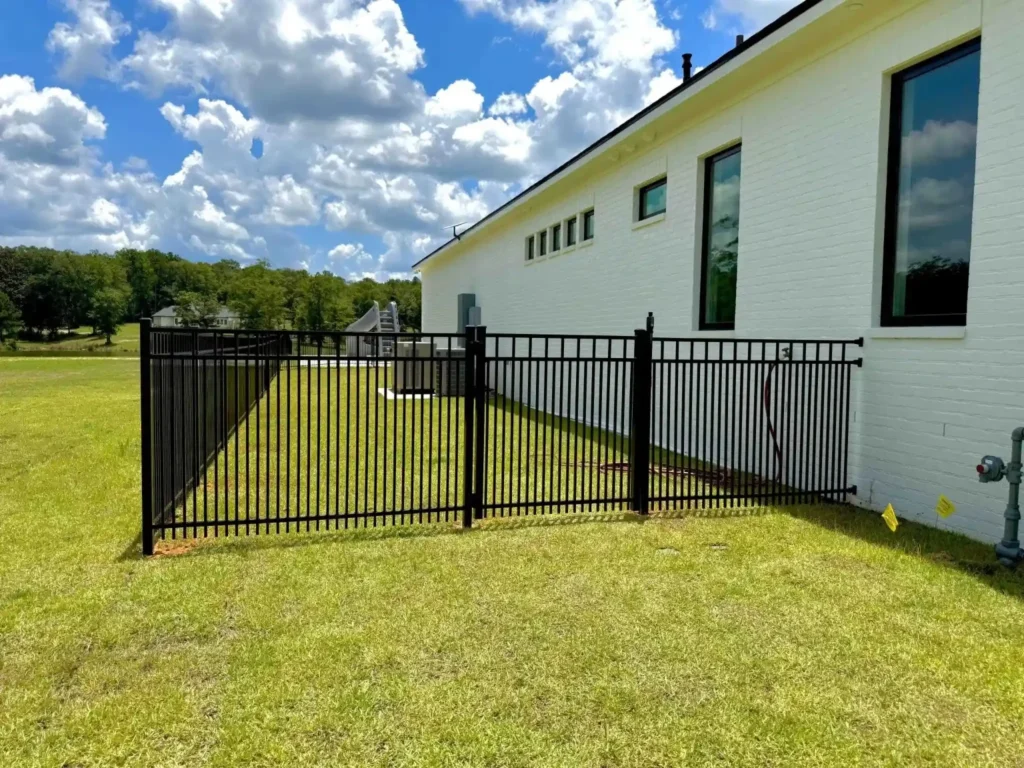
- Raking: The fence panels are built or adjusted to follow the angle of the ground. This keeps the gap at the bottom consistent, which is necessary if you have pets.
- Stepping: The fence sections stay level, but “step” down like stairs. This creates a gap under the high side of each panel, which might require extra landscaping or a “kickboard” to close.
According to a guide by the American Fence Association, choosing between raked and stepped designs often depends on the material. Aluminum and chain link are easier to rake, while solid wood panels are often easier to step.
Key Takeaway: If you have a steep slope and want to keep a small dog in the yard, a raked fence is usually the better choice to ensure no gaps exist at the bottom of the panels.
Estimating Costs and Budgeting
Budgeting for a fence involves more than just the price of the panels. You must account for gates, post caps, labor, and potential permit fees.
Hard Costs vs. Soft Costs
- Hard Costs: Materials (lumber, concrete, fasteners, gates).
- Soft Costs: Permits, tool rentals, surveyor fees, and labor.
On average, a residential fence project can range significantly in price. Data from HomeAdvisor suggests that most homeowners spend between $1,700 and $4,500 for a professional installation, though large properties or high-end materials like ornamental steel can easily exceed $10,000.
Calculating Material Needs
To get a rough estimate, measure the total linear footage of your project and subtract the width of your gates. Most fence panels come in 6-foot or 8-foot widths. Remember that you will need one more post than the number of panels (e.g., five panels require six posts).
Expert Tip: Don’t skimp on the gates. The gate is the only moving part of your fence and is usually the first thing to fail. Spend the extra money on heavy-duty hinges and a metal frame for wood gates to prevent sagging.
Maintenance: Keeping Your Fence Strong
A fence is an outdoor structure exposed to rain, snow, and UV rays every single day. Without maintenance, even the best materials will eventually degrade.
Wood Maintenance
To prevent rot, you should stain or seal a wood fence every 2 to 3 years. You can tell if your fence needs sealing by performing the “splash test.” Drop some water on the wood; if it beads up, the seal is still good. If it soaks in immediately, it’s time for a fresh coat.
Vinyl and Metal Maintenance
These materials are popular because they require much less work. For vinyl, an annual wash with a garden hose and mild soap will prevent mold and mildew buildup. For aluminum or steel, check the mounting brackets and hinges once a year for any signs of loose screws or chipped paint that could lead to rust.
Vegetation Control
Keep bushes and trees trimmed back from the fence line. Constant contact with wet leaves can accelerate rot in wood fences and cause scratches or dents in metal and vinyl.
Common Installation Mistakes to Avoid
Even with the best materials, poor installation can lead to a fence that leans or gates that won’t close.
- Shallow Post Holes: In cold climates, posts must be set below the “frost line.” If they aren’t, the ground freezing and thawing will literally push the posts out of the earth, a process known as frost heave.
- Incorrect Concrete Use: Concrete should be sloped away from the wooden post at the ground level. If the concrete forms a “cup” around the post, it will hold water and cause the wood to rot right at the base.
- Ignoring Utilities: As mentioned before, always call 811. Nothing ruins a budget faster than having to pay for a repaired fiber optic line or water main.
Putting Your Fence Strategy into Action
Building a fence is a significant project, but it is one of the most rewarding property improvements you can undertake. By identifying your main goals, selecting the right material for your lifestyle, and respecting legal boundaries, you create a structure that adds value and security for years.
The most important step is the planning phase. Take the time to walk your property, talk to your neighbors, and look at samples of different materials in various lighting conditions. Use this guide as a reference point throughout your journey. Whether you are doing the work yourself or hiring a team, being an informed homeowner ensures that the final result matches your vision.
Remember that a fence is only as good as the foundation it sits on. Focus on deep posts, quality hardware, and a solid maintenance plan. When you prioritize these details, you won’t just be building a barrier; you will be enhancing your home’s environment.
Need Expert Guidance?
If you are feeling overwhelmed by material choices or property line regulations, the team at Monkey Fence is here to help. We have the experience to guide you through the design process and ensure a professional installation that stands the test of time. For a free consultation or to discuss your project specifics, reach out to us today.
Contact Information:
- Phone: (425) 517-2355
- Email: info@monkeyfence.com
Frequently Asked Questions About Fencing
How deep should my fence posts be?
As a general rule, one-third to one-half of the post’s total height should be underground. For a 6-foot fence, your posts should typically be at least 3 feet deep. This provides enough leverage to withstand wind pressure.
Does a new fence increase property value?
A well-maintained fence can improve property value, primarily by increasing curb appeal and providing a “move-in ready” backyard for families with children or pets. According to real estate trends, privacy fences in particular offer a solid return on investment in suburban markets.
What is the longest-lasting fence material?
Ornamental aluminum and high-grade vinyl are the longevity champions. Aluminum does not rust, and vinyl does not rot or attract insects. Both can easily last 30 to 50 years with minimal care.
Can I build a fence directly on the property line?
This depends on your local laws and neighborly agreements. Some municipalities allow “party fences” on the line if both neighbors agree. However, many experts recommend building 2 to 6 inches inside your property line to avoid any future disputes.
Should I choose a 6-foot or 8-foot fence for privacy?
A 6-foot fence is the standard for most residential areas and is usually the maximum height allowed without a special permit. An 8-foot fence provides more privacy and noise reduction but may require engineering approval or a variance from your city.
Sources
- Federal Highway Administration – Research on the effectiveness of solid barriers for noise reduction.
- U.S. Consumer Product Safety Commission – Official safety guidelines and requirements for residential pool barriers.
- American Fence Association – Industry standards for fence materials and installation techniques.