
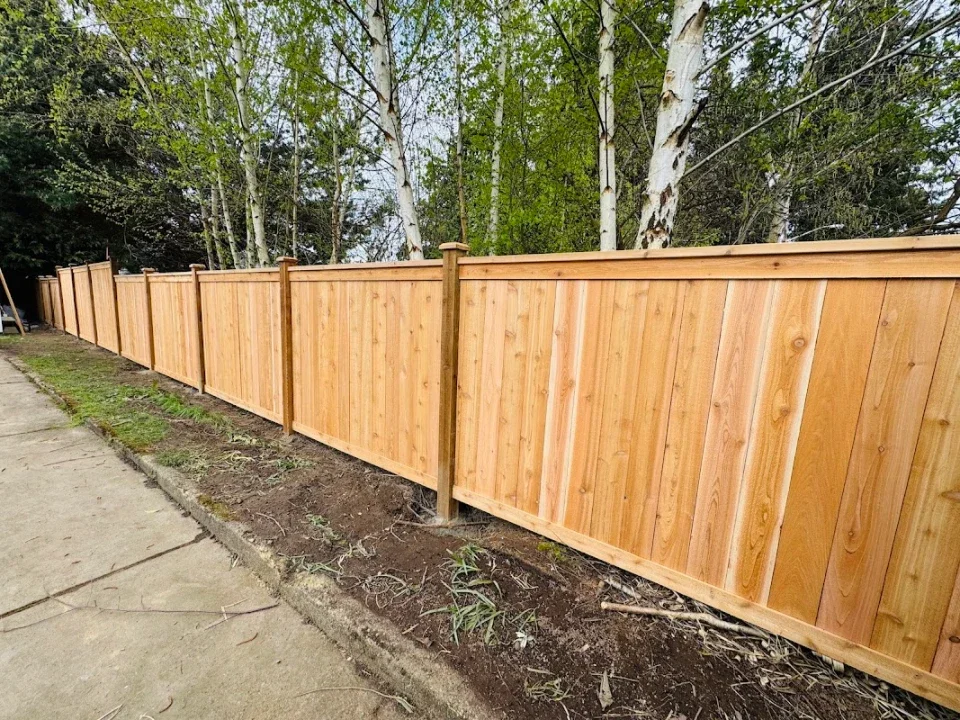
Two wood privacy fences can look nearly identical when they’re new and age very differently after a decade. The difference often starts with the material. Cedar naturally resists decay, while pressure-treated wood relies on preservatives forced deep into the lumber. Comparing material durability with expert wood fencing solutions can help homeowners make a more informed investment in their property’s privacy and appearance.
Neither material is automatically better. The right fence choice depends on where the wood will be used, your climate, maintenance expectations, appearance preferences, and budget. Here’s how cedar and pressure-treated wood compare.
What Is Cedar Fencing?
Most residential cedar fences use western red cedar, a lightweight softwood native to the Pacific Northwest. Although it isn’t technically a true cedar, its natural chemistry gives it useful decay resistance.
Western redcedar contains natural compounds called thujaplicins that help protect the heartwood from fungi. Its straight grain and relatively low shrinkage also help it stay dimensionally stable compared with many other softwoods. A western redcedar profile explains its natural durability, weight, grain, and wood characteristics.
Cedar works especially well for above-ground fence components such as pickets and rails. However, the quality of the lumber matters. The strongest natural decay resistance is found in mature heartwood, so untreated cedar should not automatically be considered suitable for direct ground contact.
What Is Pressure-Treated Wood Fencing?
Pressure-treated fence lumber is commonly made from southern yellow pine. Unlike cedar, pine has limited natural resistance to decay, so preservatives are added during manufacturing.
The lumber is placed inside a treatment vessel, where preservative solution is driven into the wood under pressure. Modern residential treatments commonly use copper-based preservatives to protect against fungi and insects. The American Chemical Society’s C&EN explains how pressure treatment and modern preservative chemistry work.
For fencing, the treatment rating matters:
- Ground-contact rated: Designed for posts and other lumber exposed to soil and persistent moisture.
- Above-ground rated: Intended for components that remain above the soil.
Older pressure-treated lumber often used CCA, a preservative containing arsenic. The National Pesticide Information Center explains that CCA was phased out of most residential applications, including fencing, in 2004.
Cedar vs. Pressure-Treated Wood: Side-by-Side
| Factor | Cedar | Pressure-Treated Pine |
|---|---|---|
| Rot resistance | Naturally resistant above ground | Preservatives provide decay protection |
| Weight | Lightweight | Heavier |
| Appearance | Red-brown, then silver gray | Greenish when new, then brown or gray |
| Stability | Generally less movement | More prone to checking and warping |
| Ground contact | Usually not recommended untreated | Ground-contact rated lumber is suitable |
| Maintenance | Cleaning and optional staining | Drying, sealing, and hardware checks |
| Best use | Pickets and rails | Posts and budget-conscious builds |
Durability and Lifespan
Cedar’s main advantage is its natural resistance to decay above ground. When fence boards can dry after rain, quality cedar can remain serviceable for many years without chemical treatment.
Its weakness is the ground line. Moisture and soil organisms create conditions where untreated cedar eventually deteriorates. Cedar posts buried directly in wet soil are therefore a common failure point.
Pressure-treated pine has the opposite advantage. Ground-contact rated posts are specifically treated to withstand the moisture and organisms found around the soil line. Above ground, treated pine performs well but can experience more checking, cupping, and twisting as it dries.
For that reason, a hybrid fence can be a practical option: treated ground-contact posts with cedar pickets and rails.
Appearance and Weathering
Fresh cedar has a warm reddish-brown appearance. Over time, sunlight and weather turn its surface silver gray. That color change is normally a cosmetic effect rather than proof that the wood is decaying.
If you want to maintain cedar’s original color, use a suitable exterior stain with UV protection. If you prefer the natural gray appearance, regular cleaning may be enough.
Pressure-treated pine often starts with a greenish cast that gradually fades. As the lumber dries, small cracks called checks can appear. Once properly dried, treated pine can accept stains and solid-color finishes, giving homeowners plenty of appearance options.
Maintenance Requirements
Neither material is maintenance-free.
For cedar, keep sprinklers from constantly wetting the fence, remove leaves and debris from the bottom edge, and clean mildew when necessary. Staining is optional but can help maintain its original color and protect the surface.
Pressure-treated fencing also needs time to dry before finishing. A simple water test can help: if water soaks into the wood instead of forming droplets, the lumber may be ready for a finish.
For both materials, trim vegetation away from the fence, prevent soil and mulch from touching the pickets, and inspect fasteners and gates at least once a year. A detailed wood fence maintenance schedule can help organize those checks.
Hardware Matters More Than You Think
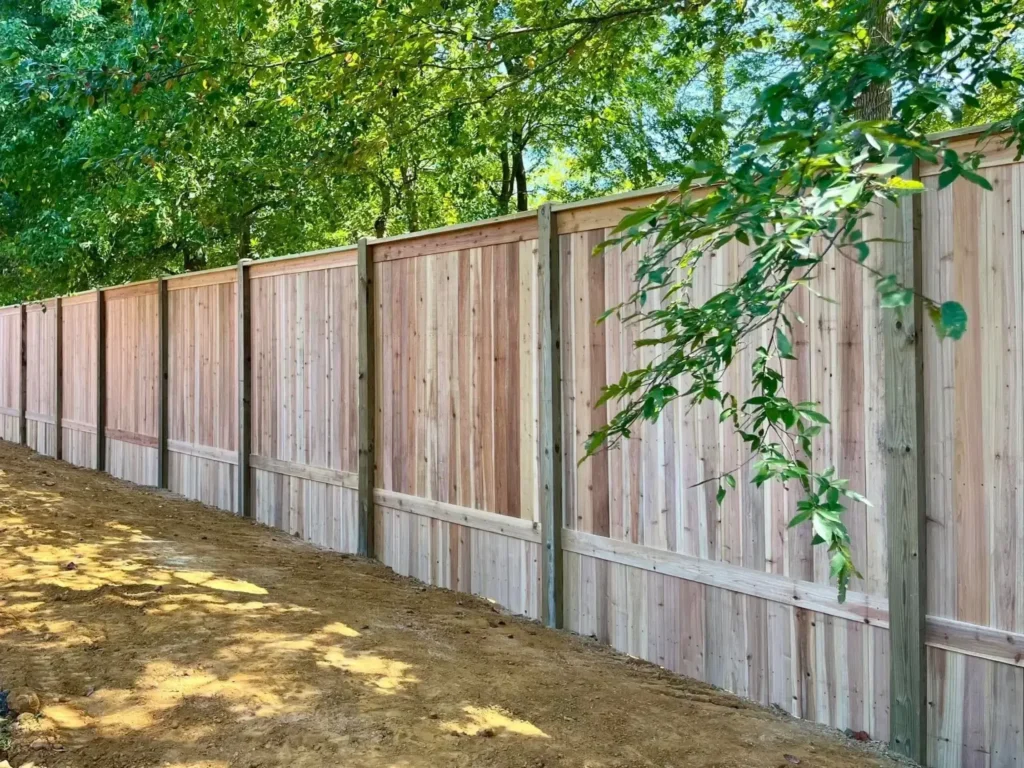
Pressure-treated lumber can be hard on metal fasteners because copper-based preservatives can accelerate corrosion. Use hot-dip galvanized or stainless steel nails, screws, and brackets designed for treated wood.
Avoid bare steel and incompatible aluminum components where the manufacturer’s guidance does not permit them.
Cedar is less aggressive toward hardware, but galvanized or stainless fasteners are still a good choice. They help prevent corrosion and dark staining around nail and screw heads.
Gate hardware deserves extra attention because gates move repeatedly and place more stress on fasteners, hinges, and posts.
Climate and Site Considerations
Your property can influence which material makes more sense.
Wet or shaded yards put more pressure on wood because the fence dries slowly. Ground-contact rated treated posts can be especially useful in these conditions.
Dry, sunny, well-ventilated locations can be favorable for cedar because the material can dry more quickly after rain.
Coastal properties have another concern: salt and moisture can accelerate hardware corrosion. Stainless fasteners and regular cleaning may matter more than the choice between cedar and treated pine.
Regardless of species, good drainage and proper post installation are critical. Privacy fences also catch significant wind, so post depth, spacing, and construction quality matter.
Which Wood Should You Choose?
| Your Priority | Better Choice |
|---|---|
| Natural appearance | Cedar |
| Silver-gray weathered look | Cedar |
| Posts exposed to soil | Ground-contact treated pine |
| Lower initial material cost | Often pressure-treated pine |
| Solid-color stain or paint | Pressure-treated pine after proper drying |
| Long-term hybrid performance | Treated posts + cedar pickets |
Material prices vary by location and lumber supply, so compare current quotes instead of relying on old price assumptions.
Common Problems to Prevent
Warped pickets: More common as treated pine dries. Use quality lumber and proper fastening.
Rust streaks: Usually caused by unsuitable fasteners. Choose galvanized or stainless hardware.
Post rot: Keep soil and standing water away from untreated wood and use ground-contact rated posts where required.
Mildew: Improve airflow, trim vegetation, and clean affected surfaces.
Loose pickets: Inspect fasteners annually and replace failed nails or screws before boards begin moving.
Need Expert Guidance?
Choosing between cedar and pressure-treated wood is easier when you consider the entire fence rather than just the lumber price. Cedar offers natural decay resistance and a distinctive appearance, while pressure-treated wood provides strong protection where moisture and soil create the greatest risks.
For homeowners who want both advantages, a properly constructed hybrid fence can be a practical solution.
If you’re comparing materials for your property, Monkey Fence can help you evaluate the layout, materials, and construction approach. Contact the team at info@monkeyfence.com or call (425) 517-2355 to discuss your fencing project.
Frequently Asked Questions
Is cedar better than pressure-treated wood?
Not in every situation. Cedar is excellent above ground, while treated wood has a major advantage where posts contact soil.
Can cedar pickets be installed on pressure-treated posts?
Yes. This combination uses treated wood where ground exposure is greatest and cedar where appearance and dimensional stability matter.
How soon can pressure-treated wood be stained?
Usually after it has dried sufficiently. A water-absorption test can help determine whether the surface is ready.
Does cedar need to be sealed?
Not necessarily for basic above-ground decay resistance. Sealing is mainly used to protect appearance and slow weathering.
Why does new pressure-treated wood look green?
The greenish appearance commonly comes from the copper-based preservative treatment and normally fades as the lumber weathers.