
Maintaining a wooden barrier requires a consistent care routine to prevent decay, warping, and weathering. Proactive wood fence maintenance preserves the strength and appearance of your boundary for decades. We recommend inspecting the structure annually, cleaning off organic growth, and applying a protective finish every two to three years.
Monkey Fence, we have serviced thousands of properties and understand how regional weather conditions affect outdoor lumber. This guide offers practical steps to keep your wood barrier looking fresh and standing strong against the elements.
How weather degrades untreated wood structures
Unprotected wood absorbs water rapidly during heavy rainfall or high humidity. According to the USDA Forest Service Forest Products Laboratory, moisture absorption causes wood fibers to swell, while subsequent drying cycles cause them to shrink, leading to warp and cracks.
Continuous exposure to solar ultraviolet radiation also breaks down lignin, the natural binding agent in wood cells. Over time, this degradation strips the lumber of its natural oils, turning the surface a faded, silvery gray.
Without a protective barrier, fungal spores find a perfect home in damp lumber, causing deep rot that compromises structural stability.
When is the right time to clean and seal?
Timing your maintenance is just as important as the application process itself. Before scheduling your work, check the local weather forecast to ensure at least 48 hours of dry weather.
Our field technicians at Monkey Fence wood fence experts recommend using the water bead test to determine if your barrier needs a fresh coat. Sprinkle a few drops of water onto the surface of the wood panels.
If the water beads up on the surface, your previous barrier is still functioning well. If the wood absorbs water rapidly, it is time to schedule a wood fence sealing service.
Bonus Tip: Avoid working in direct, scorching sunlight. Applying coatings in high heat causes them to dry too fast, preventing the wood from fully absorbing the product.
Essential tools for a successful maintenance project
Before starting your restoration, gather the correct equipment to ensure a smooth process. You will need a pressure washer or a stiff-bristle brush, wood cleaner, and your choice of protective coating.
For application, choose between a high-capacity pump sprayer, a roller, or a wide exterior paintbrush. A sprayer covers large areas quickly, while brushes work best for driving the product into deep cracks and gaps to help protect your Privacy Fence Installation.
The following table breaks down the expected lifespan and maintenance needs of various exterior wood types to help guide your care schedule.
Lifespan and maintenance intervals by wood species
| Wood Species | Expected Lifespan | Care Interval | Susceptibility to Rot |
|---|---|---|---|
| Western Red Cedar | 15 to 20 Years | Every 2 to 3 Years | Low |
| Redwood | 15 to 20 Years | Every 2 to 3 Years | Low |
| Pressure-Treated Pine | 10 to 15 Years | Every 2 to 3 Years | Moderate |
| Spruce or Fir | 5 to 10 Years | Every 1 to 2 Years | High |
The complete step-by-step fence maintenance guide
1. Preparation and deep cleaning
Begin by clearing away any climbing vines, tall weeds, or overhanging branches that touch the panels. Use a specialized wood cleaner to break down mold, dirt, and gray UV-damaged surface wood.
Scrub the surfaces thoroughly or use a pressure washer set to a low setting, keeping the nozzle twelve inches away. Let the wood dry completely for twenty-four to forty-eight hours before moving to the next step.
2. Repairing structural issues
Inspect the entire perimeter for loose boards, rusted fasteners, or split pickets. Replace compromised sections and secure loose boards using exterior-grade deck screws.
Bonus Tip: Avoid using cheap, standard nails during repairs. High-quality stainless steel or hot-dipped galvanized screws prevent ugly rust streaks from staining your freshly finished wood.
3. Applying the protective finish
Apply your chosen coating evenly, working from the top of the panels down to the bottom. If you are using a sprayer, follow behind with a dry brush or roller to push the liquid deep into the grain.
Make sure to pay close attention to the bottom of the pickets and the end grains of the posts. These areas are closest to the soil and absorb the most moisture.
Important elements to evaluate before choosing a finish
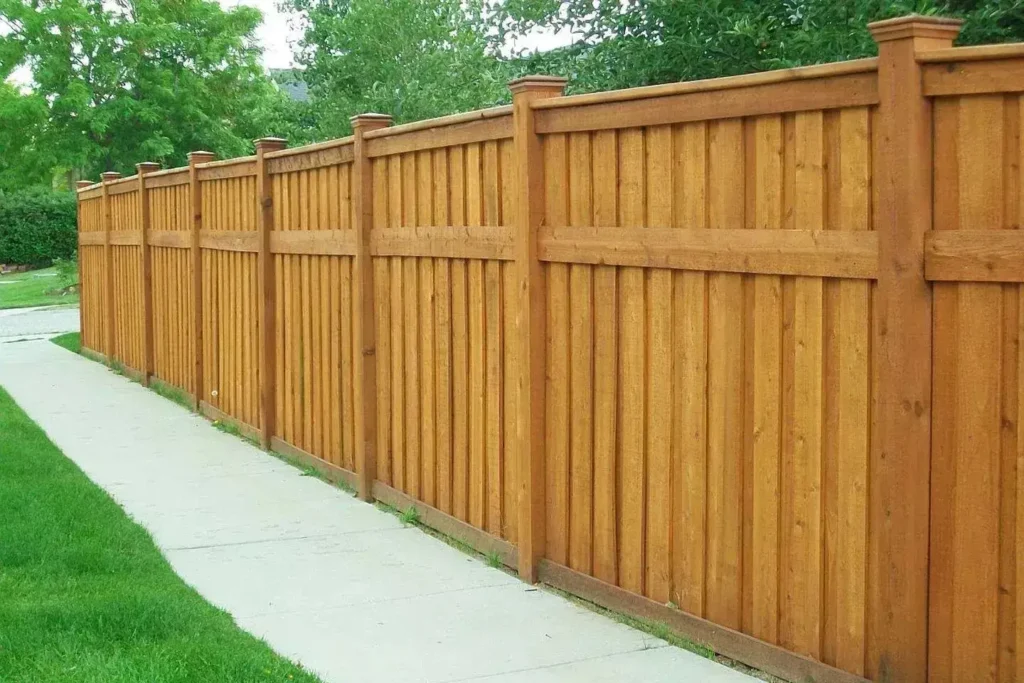
Different finishes offer varying levels of protection, visual appearance, and longevity. Homeowners and business owners must weigh these factors before selecting a product at the local supply store.
Clear sealers preserve the natural grain and color of the wood but offer minimal UV protection. Semitransparent options add a hint of color while blocking solar rays more effectively.
Solid stains behave similarly to paint, covering the natural grain but providing the highest level of sun protection. Keep in mind that solid coatings can peel, requiring intensive scraping during future maintenance cycles.
To help you decide, here are some helpful fence staining tips to achieve a durable finish:
- Choose oil-based formulas for deeper penetration into wood.
- Water-based options dry faster and clean up easily with soap and water.
- Look for products containing mildewcides to stop mold growth.
How do you keep your barrier looking new between treatments?
Regular upkeep minimizes the labor required when it is time to recoat your structure. Keep lawn sprinklers directed away from the panels to prevent mineral staining and premature rot.
Trim back landscaping regularly to allow proper airflow, which helps the wood dry quickly after rain. Gently sweep away dirt, leaves, and cobwebs from the base of the posts a few times a year.
Protect your investment with regular upkeep
Taking a proactive approach to wood fence maintenance extends the service life of your structural barriers and preserves curb appeal. Consistently cleaning and reapplying protective coatings shields lumber from moisture damage, mold growth, and harmful solar rays. Evaluate your property’s specific weather exposure and timber type to establish a practical care plan that keeps your boundaries secure for the long haul.
Request a professional consultation today
Proper maintenance takes time and physical effort. If you need assistance keeping your property borders secure and beautiful, Monkey Fence is ready to help. We offer high-quality care services to protect your residential investment. Contact us today at (425) 517-2355 or email info@monkeyfence.com to schedule your free quote and keep your boundaries in prime condition.
Common questions about preserving outdoor wood structures
How long should I wait to seal a new pressure-treated wood barrier?
New pressure-treated wood contains high levels of chemicals and moisture. We advise waiting three to six months for the lumber to dry completely before applying any sealers or stains.
Can I apply protective coatings over painted wood?
No, you cannot apply stain or sealer directly over paint. You must scrape and sand away the old peeling paint entirely to expose the bare wood pores before applying a new finish.
Is it better to spray, brush, or roll the protective product?
Spraying is the fastest method for covering large surface areas. However, you must back-brush the wet product immediately to ensure it penetrates the pores of the wood and applies evenly.
What is the difference between a sealer and a stain?
Clear sealers only block moisture penetration while leaving the wood grain fully visible. Stains contain pigments that block solar UV rays, protecting the wood from graying and severe sun damage.
How does temperature affect the application of wood finishes?
Apply coatings when temperatures are between fifty and ninety degrees Fahrenheit. Extreme cold prevents proper drying, while excessive heat causes the product to dry too fast, preventing deep penetration.
Sources
- USDA Forest Service Forest Products Laboratory – Federal research facility focusing on wood preservation, weathering, and moisture control.
- FenceTrac Wood Durability Report – Industry reference detailing typical wood species lifespans and maintenance practices.