
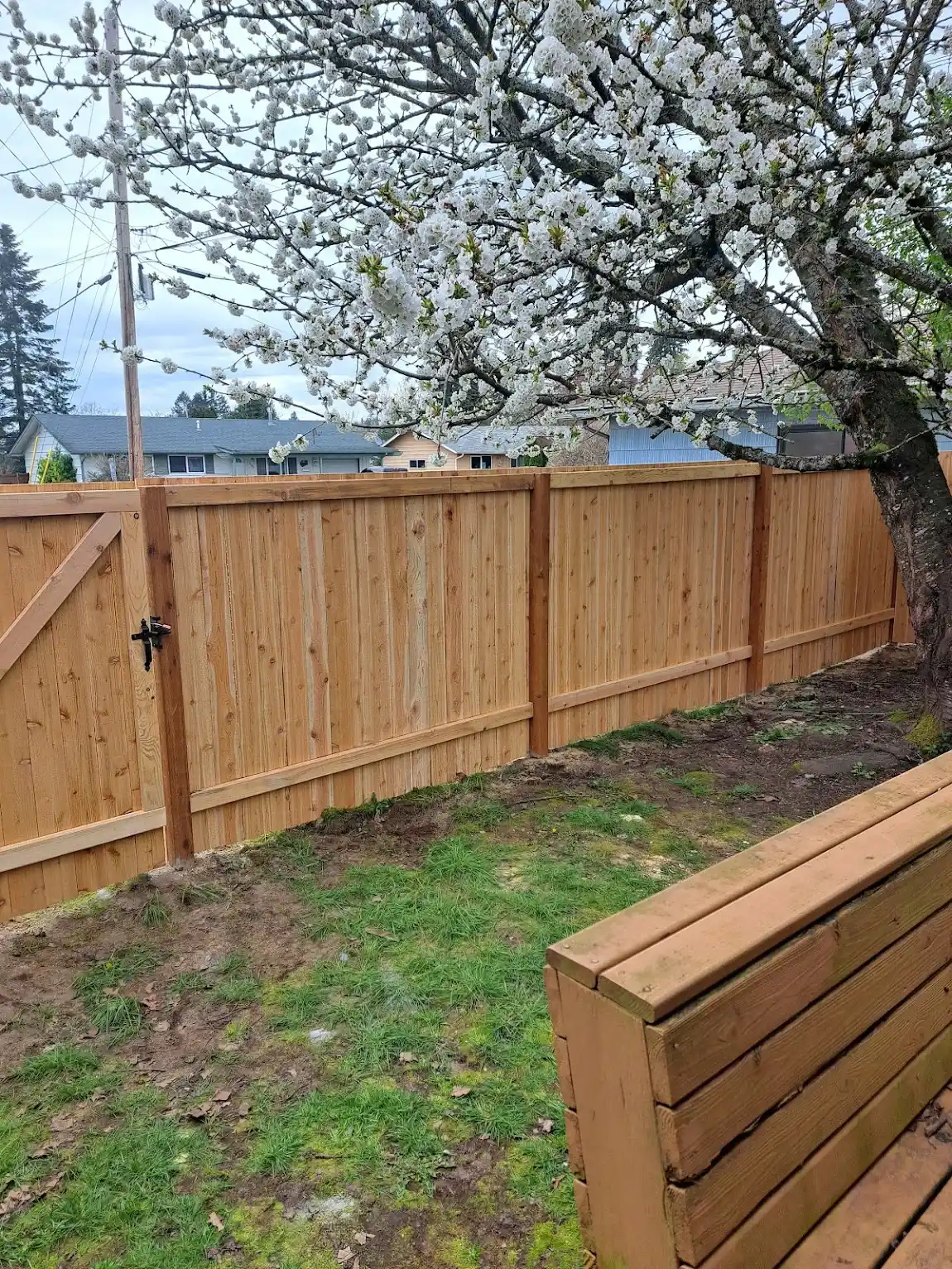
To extend the life of your wooden fence in Lakewood, WA, you must prioritize moisture control, regular cleaning, and consistent staining or sealing. Because the Pacific Northwest experiences high rainfall and humidity, wood surfaces are prone to rot and fungal growth if left unprotected. Routine inspections and immediate repairs of loose boards or hardware prevent small issues from becoming structural failures.
This guide provides practical steps and expert maintenance strategies to help you protect your investment from the local climate. We draw on years of experience managing outdoor structures in Pierce County to ensure your boundary remains strong and attractive for years to come.
Inspect your fence for signs of wear and damage
Start by walking the perimeter of your yard every spring and fall. Look for boards that feel soft to the touch or show dark discolorations, as these are indicators of rot. Check the base of every wood fence panel where it meets the soil, since constant contact with wet ground accelerates decay.
Tighten any loose screws or nails that have backed out due to wood expansion and contraction. If you find rusted hardware, replace it with galvanized or stainless steel options. These materials resist the corrosive effects of the damp Lakewood air much better than standard steel.
Clean the wood surface to remove debris and mold
Dirt, moss, and mildew trap moisture against the wood fibers, which leads to premature aging. Use a garden hose with a spray nozzle or a pressure washer on a low setting to clear away buildup. Be careful not to use too much pressure, as it can splinter the wood and create deep gouges.
For stubborn stains or organic growth, apply a mixture of mild soap and water or a specialized oxygen bleach cleaner. Avoid harsh chlorine bleach, which can strip the wood’s natural color and damage nearby plants. Scrubbing with a soft brush helps lift grime without compromising the integrity of the cedar fencing material.
Apply a high-quality sealant or stain
A protective coating acts as a shield against rain and UV rays. In Lakewood, a semi-transparent stain is often more effective than paint because it allows the wood to breathe while providing pigment that blocks sun damage. Sealants should be reapplied every two to three years, depending on exposure.
Before applying any product, ensure the wood is completely dry. You can test this by sprinkling a few drops of water on the surface; if the water beads up, the old seal is still working. If the water soaks in, it is time for a fresh coat. According to Bob Vila‘s maintenance tips, staining not only improves appearance but also significantly slows the graying process caused by sunlight.
Manage vegetation and landscaping near the perimeter
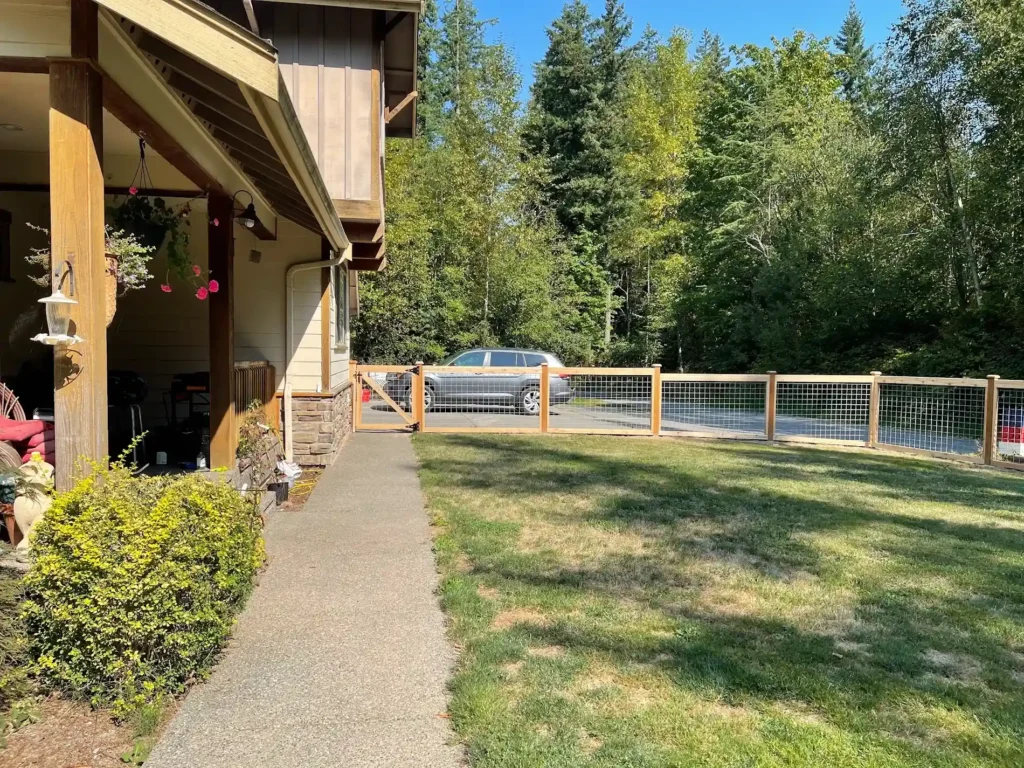
Plants that grow directly against your fence limit airflow and keep the wood damp. Trim back bushes, vines, and tall grass to create at least a few inches of space between the foliage and the boards. This simple step allows the wind to dry the wood after a rainstorm.
Avoid piling mulch or soil against the bottom of the fence. Constant moisture from landscaping beds is a leading cause of “post rot,” where the structural support fails before the rest of the fence. Ensuring proper drainage away from the fence line will keep the wood dry and stable.
Consider the environmental factors of the Pacific Northwest
The local climate in Lakewood is characterized by frequent rain and overcast days. Data from the National Weather Service indicates that this region receives significant annual precipitation, which puts unique stress on outdoor timber. This constant dampness makes wood more susceptible to pests such as carpenter ants and termites.
Comparing Maintenance Methods for Longevity
| Maintenance Task | Frequency | Primary Benefit | Skill Level |
|---|---|---|---|
| Visual Inspection | Twice a Year | Early detection of rot/pests | Beginner |
| Power Washing | Every 1-2 Years | Removes mold and moss | Intermediate |
| Staining/Sealing | Every 2-3 Years | UV and water protection | Intermediate |
| Hardware Replacement | As Needed | Maintains structural integrity | Beginner |
| Vegetation Trimming | Monthly (Growing Season) | Improves airflow and drying | Beginner |
Bonus Tip:
If you are installing a new pressure-treated fence, let the wood “weather” for a few weeks to a few months before staining. This allows the factory-applied chemicals to dry out, allowing the stain to penetrate deeper into the wood.
Factors to evaluate before performing repairs
Before you decide to repair or replace sections of your fence, look at the overall condition of the posts. If the posts are leaning or wobbly, the foundation may be compromised. Replacing individual boards is easy, but if more than 30% of the fence shows signs of structural rot, a full replacement might be more cost-effective in the long run.
Additionally, consider the age of the wood. Most cedar fencing material lasts between 15 to 20 years with proper care. If your fence is approaching this age, heavy cleaning or pressure washing might actually cause more damage than good. Evaluate the cost of materials versus the time required for intensive restoration.
What causes most fence failures in Washington?
The primary culprit is moisture trapped at the ground level. When fence posts are set directly in dirt without proper gravel drainage or concrete footings that slope away from the wood, they rot from the inside out. This is why many residential and commercial owners in the Lakewood area see their fences leaning after a particularly windy or rainy winter.
Another common issue is the use of non-galvanized fasteners. In our humid environment, standard nails rust quickly. This rust bleeds into the wood, creating unsightly black streaks and weakening the connection points. Using the right hardware from the start prevents these “bleed” marks and keeps the structure secure.
Professional Insight:
Use a moisture meter before staining. The wood’s internal moisture content should be below 12% to 15% for the best stain adhesion. Applying stain to wet wood often results in peeling within a few months.
Summary of fence care strategies
Maintaining a Wooden Fence in Lakewood, WA requires a proactive approach to moisture management. By cleaning the surface, reapplying protective stains, and keeping plants at a distance, you significantly increase the structure’s lifespan. Regular inspections allow you to catch small areas of rot or loose hardware before they compromise the entire boundary. Focus on using high-quality materials that are rated for the Pacific Northwest’s unique weather patterns to ensure your yard remains secure and beautiful.
Reach out for expert fence assistance
We are ready to help you keep your property looking its best. Our team at Monkey Fence provides professional guidance on maintenance and structural integrity for all types of wood boundaries. If you have questions about the condition of your fence or need a professional evaluation, we offer clear, expert advice. You can call us at (425) 517-2355 or send an email to info@monkeyfence.com to discuss your project. We provide a free quote for those looking to improve or replace their outdoor structures.
Frequently Asked Auestions
What is the best wood species for longevity in Lakewood?
Western Red Cedar is the top choice for this region. It contains natural oils that resist rot and insects, making it more durable than pine in wet conditions.
How do I fix a leaning fence post?
You must dig out the old concrete or soil around the post and reset it. In many cases, it is more effective to install a new post entirely rather than trying to patch the old base.
Does painting a fence protect it better than staining?
Paint provides a thick barrier, but it often traps moisture inside the wood, leading to hidden rot. Stains are generally preferred because they soak into the fibers and allow the wood to dry out.
When is the best time of year to stain my fence?
Late summer or early fall is ideal. You need at least 48 hours of dry weather to ensure the wood is sufficiently thirsty to absorb the sealer.
Can I spray my fence for bugs?
While staining provides some protection, keeping the wood dry is the best defense. If you see signs of termites or carpenter ants, consult a pest professional to treat the area specifically.
Sources
- Bob Vila – Comprehensive guide on the benefits and techniques of staining outdoor wood structures.
- National Weather Service – Official source for regional climate data and precipitation levels in the Pacific Northwest.